Generator Low Oil Pressure Warning: 6 Possible Causes
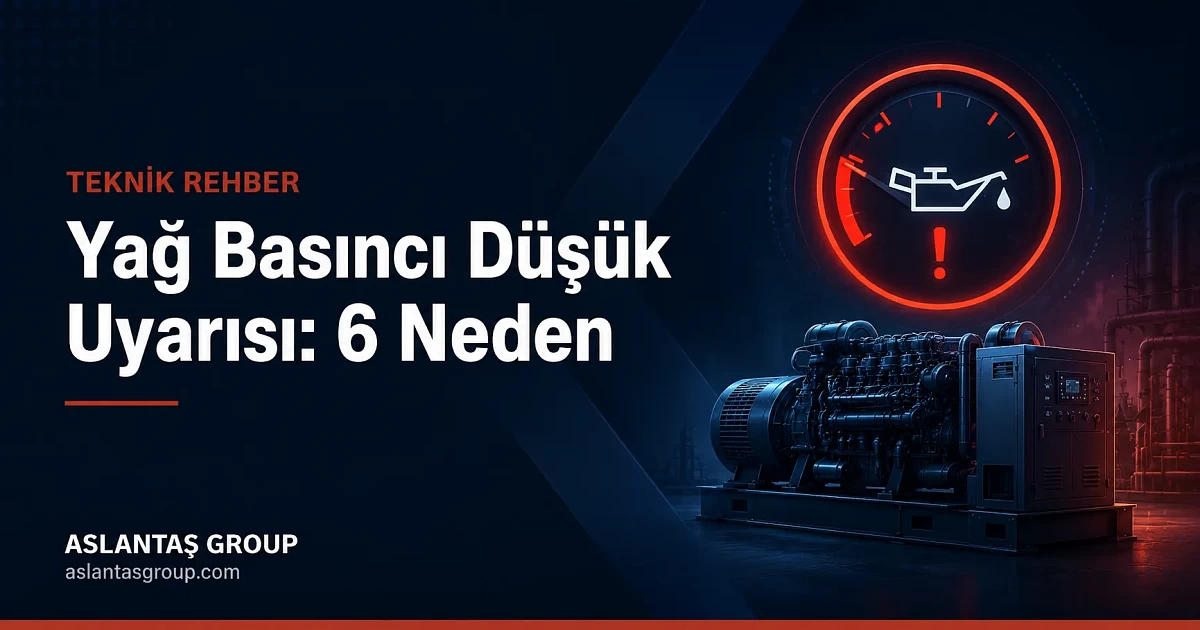
A “low oil pressure” warning lighting up on your generator's control panel is one of the most critical alarms and must not be ignored. Insufficient lubrication can cause permanent damage to the engine bearings and crankshaft within minutes. In this article, we look at the 6 most common causes of the warning and the first steps to take.
Why Is Oil Pressure So Important?
Engine oil forms a thin film between moving parts, preventing metal-to-metal contact, reducing friction and carrying away part of the heat the engine produces. When oil pressure falls below a certain level, it means this protective film cannot form sufficiently at critical points (especially the crankshaft bearings and the turbocharger unit). For this reason, most generators automatically cut the circuit and shut the engine down to protect it when low oil pressure is detected.
6 Possible Causes
1. Low Oil Level
This is the simplest and most common cause. When the oil level drops below the minimum mark, the oil pump cannot draw enough oil and pressure in the system falls. In generators that are not checked periodically, small leaks can reach this level over time.
2. Failure of the Oil Pressure Switch (Sensor)
In some cases, the actual oil pressure is normal, but the sensor itself (the switch) is faulty and reports a false low value. Over time, switches can produce incorrect signals due to loss of electrical contact, internal diaphragm fatigue, or moisture/corrosion.
3. Clogged Oil Filter
A dirty or expired oil filter restricts the flow of oil from the pump to the engine, causing a drop in pressure. Skipping filter change intervals accelerates this problem.
4. Oil Pump Failure or Wear
Wear on the gear or rotor in the oil pump prevents the system from delivering oil at the required flow rate. This is usually a situation that requires more serious maintenance/repair.
5. Wrong Viscosity or Degraded Oil
Using oil of a different viscosity than the manufacturer specifies (especially very low-viscosity oils), or oil that is past its change interval, thinned out or contaminated, can cause pressure values to be measured low.
6. Internal Engine Wear
Wear on the crankshaft bearings or other moving parts can enlarge the oil clearances and prevent the system from holding pressure. This is a situation to be considered after the causes above have been ruled out, and it usually requires more extensive maintenance.
What to Do First When the Warning Appears
- Shut the generator down safely; do not keep running it while the warning is active.
- Check the oil level with the dipstick; if necessary, add oil of the type and amount recommended by the manufacturer.
- Check the date of the last oil filter change.
- Look for any visible leaks (under the engine, gaskets, hose connections).
- If the level and filter are normal and the warning persists, consider the possibility that the switch (sensor) is faulty.
When Is a Switch Replacement Needed, and How Can You Tell?
The following situations may indicate that the problem originates from the sensor:
- The warning keeps recurring even though the oil level and quality are normal,
- The gauge panel readings look inconsistent/fluctuating (suddenly dropping to zero and returning to normal),
- There is visible corrosion or looseness at the switch's electrical connection point.
If you see these symptoms, replacing it with an oil pressure switch that matches the engine type and thread size usually solves the problem. Because the sensor is a relatively inexpensive part that is quick to replace, it is important not to confuse it with a genuine mechanical failure (pump, bearing, etc.), so that major maintenance is not undertaken unnecessarily.
Conclusion
Never ignore a low oil pressure warning; however, before panicking, checking the level, filter and sensor in that order often resolves the problem quickly. If you need a reliable, OEM-compatible oil pressure switch, you can explore Aslantaş Group's switch product group.