Why Won't a Generator Start in the Cold? Checking the Block Heater
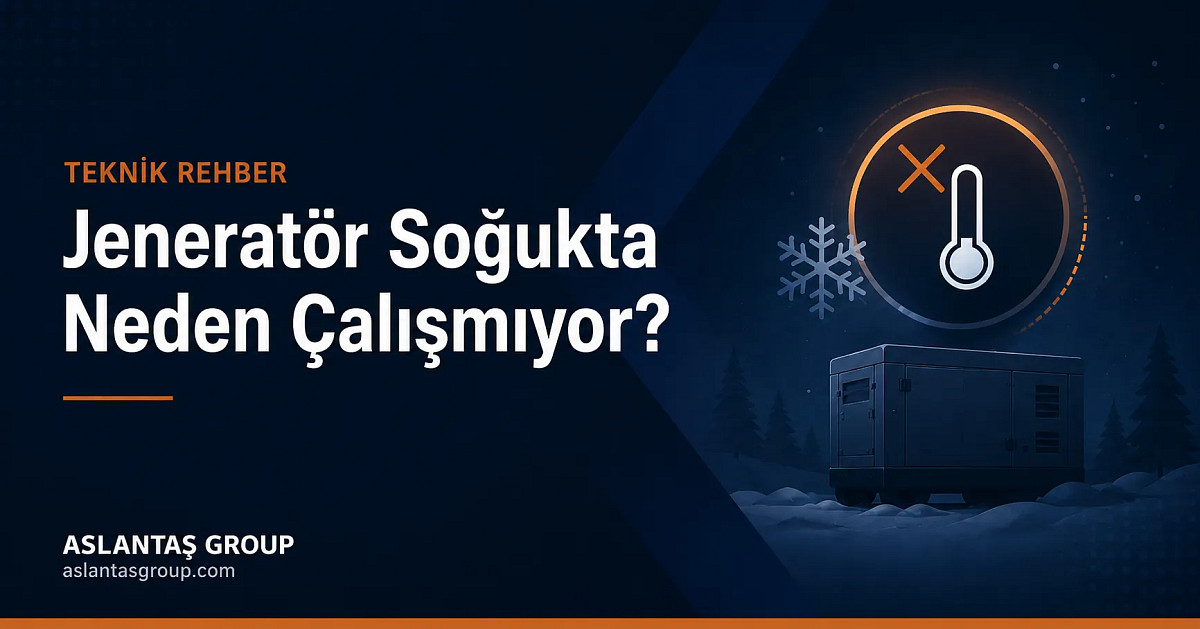
A generator that will not start in winter is a serious risk, especially for facilities that depend on uninterrupted power. One of the most common causes is that the engine block cannot reach the temperature needed for ignition in low ambient temperatures. In this article, we explain step by step the root causes of cold-start problems and how to check your block heater.
Why Is a Generator Hard to Start in Cold Weather?
Unlike petrol engines, diesel engines do not use spark plugs for ignition; they ignite the fuel with the heat generated by compressing it (compression ignition). When the temperature of the engine block and inside the cylinders drops, this compression heat struggles to achieve reliable ignition. In addition:
- Engine oil viscosity increases at low temperatures, which makes the crankshaft harder to turn and makes the battery work harder.
- Paraffin crystallization in diesel fuel (fuel "waxing") can clog the fuel filter at very low temperatures.
- Battery capacity drops noticeably in the cold; it may not deliver enough current to crank an engine that is already struggling.
The combination of these three factors accounts for most "generator won't start" complaints, particularly in environments below 0°C.
What Is the Role of the Block Heater?
A block heater (engine block heater) is an electric heating element that keeps the coolant, or the block itself, at a set temperature (typically around 40-60°C) while the engine is not running. Its purpose is to start the engine from a "warm" baseline so that it can:
- Keep the oil more fluid,
- Make compression ignition easier on the first attempt,
- Reduce the load on the battery and starter motor,
- Reduce internal engine wear (friction from dry starts).
The block heater is designed to stay active continuously while the generator is in "standby" mode connected to mains power; in other words, even when the generator is not running, it draws power from the mains and keeps the engine ready.
How to Check Your Block Heater
If you are having cold-start problems, we recommend checking in the following order:
- Check the electrical connection: Is the heater's plug or connection cable properly attached to the socket or panel? Is the cable damaged?
- Check the fuse and relay: The relevant fuse on the panel may have tripped. A faulty relay can also prevent the heater from receiving power.
- Check the temperature of the heater body: After the engine has been connected to the mains for a few hours, touch the area where the heater is located (carefully, by hand) or use an infrared thermometer. If you do not feel noticeable warmth, the heater is probably not working.
- Check the coolant level: If the coolant level is low, the heater cannot make full contact with the liquid and will operate inefficiently.
- Look for signs of leakage: If there is moisture, rust or a pool of fluid around the heater mounting area, there may be a leak at the gasket or the body.
When Does It Need Replacing?
If you notice one or more of the following signs, the block heater may need to be replaced:
- The heater never warms up (even though power is present),
- The fuse it is connected to trips repeatedly within a short time,
- There is visible cracking, corrosion or fluid leakage on its body,
- A burning smell or discoloration is noticed around the heater area.
In these cases, rather than removing and inspecting the heater yourself, we recommend disconnecting the power and contacting a qualified technician; improper intervention, particularly in liquid-cooled systems, can lead to engine damage.
Additional Tips for Cold Weather
- In winter, change the engine oil to the winter-grade (low-viscosity) oil recommended by the manufacturer.
- Make sure the fuel tank contains winter-grade diesel or a cold-weather additive.
- Test the batteries regularly; battery performance drops quickly in the cold.
- Run the generator briefly at regular intervals (for example, weekly) to keep the system ready.
Conclusion
Most cold-start problems can be prevented with a well-maintained, correctly sized block heater. If you have found a fault in your heater, or you are looking for a quality block heater element suited to your generator, you can explore our Aslantaş Group block heater element product range.